
Things to Do in North Macedonia in April
April weather, activities, events & insider tips
Low Season · Budget Friendly
April Weather in North Macedonia
Long-run averages for April in Skopje
62°F (17°C)
High Temp
46°F (8°C)
Low Temp
1.8 inches (46 mm)
Rainfall
62%
Humidity
6
Sunny-Day UV
⚠ Mountain weather above 1,500 m (4,921 ft) in Mavrovo, Pelister, and Galicica can shift from clear skies to cold rain or sleet within an hour during April. Always carry waterproof layers and a warm mid-layer on any hike, even if the morning looks cloudless at the trailhead. Late-season snow on north-facing slopes above 1,800 m (5,900 ft) can make trail conditions unpredictable.
Is April Right for You?
Weigh the advantages and considerations before booking
Advantages
- + April is shoulder season at its finest, Ohrid's Church of St. John at Kaneo, Samuel's Fortress, and the entire Old Bazaar in Skopje are yours without the summer tour-group crush, and you will hear lake water lapping against the stone quay instead of selfie-stick chatter.
- + Skopje's average high of 17°C (62°F) hits the sweet spot for outdoor exploration, warm enough for shirtsleeves by midday, cool enough that climbing to hilltop fortresses and hiking canyon trails feels invigorating rather than punishing.
- + Spring wildflowers carpet the lower meadows of Galicica and Pelister national parks through April, with crocus, gentian, and wild orchid lining the trails in a display that the brown, baked-out summer months simply cannot match.
- + Accommodation across North Macedonia runs at shoulder-season rates, and the lakefront properties in Ohrid that require months-ahead booking for August are often available same-week in April, giving you genuine flexibility in where and how you stay.
Considerations
- − Lake Ohrid's water is far too cold for comfortable swimming in April, the lake sits at 695 m (2,280 ft) elevation and will not reach swimmable temperatures until late June at the earliest, so plan for lakeside scenery, not lakeside plunging.
- − Mountain passes above 1,800 m (5,900 ft) in Mavrovo and on Bistra may still carry late-season snow, closing the highest hiking routes until late May or June and limiting ambitious alpine itineraries.
- − Some seasonal restaurants and boat-tour operators along the Ohrid lakefront do not open until May, which means your dining and excursion options are noticeably thinner than peak season, count on the year-round old-town establishments instead.
Best Activities in April
Top things to do during your visit
Matka Canyon Gorge and Cave Exploration
Matka Canyon sits barely 15 km (9 miles) southwest of Skopje's center, but the moment you enter the gorge the city noise dies and all you hear is water against limestone and the occasional echo of a paddle stroke bouncing off both walls. In April the Treska River runs a deep jade-green from spring meltwater, cold enough that you feel the chill rising off the surface as you paddle toward Vrelo Cave at the canyon's far end, a cave where stalactites drip into an underground lake measured to over 200 m (656 ft) deep, the kind of quiet subterranean space that makes you instinctively lower your voice. The gorge walls rise roughly 300 m (984 ft) on both sides, draped in fresh beech leaves and smelling of wet moss and damp stone. This is arguably the best month to come: summer turns the gorge oppressively hot and the boat queue stretches for an hour. But April likely means you share the water with a handful of other visitors at most. The rim trail above offers vertigo-inducing views down to that green water, though it gets slippery after rain, wear proper shoes, not sandals. Allow at least a half day. Rushing Matka defeats every reason to go.
Booking Tip: Kayak and boat operators cluster at the canyon entrance and run year-round, so in April you can often arrange a trip on arrival. For a guided experience that includes Vrelo Cave access and canyon context, see current options in the booking section below. Allow at least half a day and bring water, there is one small cafe at the entrance but nothing once you are in the gorge.
Ohrid Old Town and Lakeside Heritage Circuit
Ohrid earns its UNESCO inscription honestly, the old town climbs a hillside above a lake so clear you can see the bottom at 5 m (16 ft) depth, and within a few hundred meters you will pass the cliff-perched Church of St. John at Kaneo, the 11th-century Church of St. Sophia with Byzantine frescoes still carrying traces of original pigment, and the remains of Plaoshnik where St. Clement taught in the 9th century. In April the town belongs to its residents rather than the summer tourist tide that triples Ohrid's population by August. The morning fish market on the waterfront still sells the day's catch of Ohrid trout and eel, and the smell of wood smoke from the bakeries making somun bread, round, dense, pulled apart by hand, drifts through the cobblestone lanes before most visitors have finished breakfast. April's temperatures are good for covering ground on foot without the exhaustion that summer heat brings to the steep climb up to Samuel's Fortress at the hilltop, where the view sweeps across the lake to the Albanian mountains on the far shore. The honest trade-off: the lake is far too cold for swimming, and a few seasonal lakefront spots will not reopen until May.
Booking Tip: Book at least a week ahead if you want a guided walking tour that covers the major churches and fortress with real historical depth rather than a surface-level map walk. Full-day private tours that include the scenic southern shore drive to St. Naum Monastery are worth the extra cost for the context alone, see current options in the booking section below. April's low visitor numbers mean most operators are flexible on timing and group size.
Skopje Old Bazaar Food and Culture Walks
North Macedonia's capital gets unfairly dismissed by travelers rushing to Ohrid. But the Old Bazaar, the largest Ottoman-era market district in the Balkans outside Istanbul, rewards a full day of slow, attentive wandering. In April, Skopje's average high of 17°C (62°F) is comfortable enough for lingering over food without the sweat-soaked trudge that July imposes on these stone lanes. Follow the ring of hammers from the coppersmiths still working in their cramped workshops, and the smell of burek, layers of phyllo stretched tissue-thin, filled with crumbled white cheese, baked in a wood-fired oven until the top layer shatters at a touch, will pull you into a bakery before you have made a conscious decision. Guided food walks take you through the morning produce sellers, the kafanas where locals drink thick Turkish coffee with grounds settling in the cup and argue over football, and past trays of tulumba, fried dough soaked in syrup so sticky it strings between your fingers. Cross the Stone Bridge to the south bank for the Skopje 2014 monuments, oversized neoclassical statues and baroque facades that locals either mock openly or defend half-heartedly, but that undeniably give the capital a visual identity no other Balkan city shares. The whole experience is best in the morning, when the bread is fresh and the bazaar smells of yeast and roasting peppers rather than late-afternoon exhaust.
Booking Tip: Food tours and cultural walks in Skopje tend to run daily year-round. Book a day or two ahead through the options in the booking section below to secure your preferred language and time slot. Morning tours catch the bazaar at its most alive. The bakers are working. The coppersmiths are hammering. The kafanas have not yet switched from coffee to rakija.
Mavrovo National Park Spring Hiking
Mavrovo National Park, roughly 100 km (62 miles) west of Skopje, is North Macedonia's largest protected area, and April places it in a specific spring window where the snow line has retreated to the highest ridges above 2,000 m (6,562 ft) while the valleys below have erupted into wildflower season. The trails through beech and oak forest at lower elevations, around 1,000 to 1,400 m (3,280 to 4,593 ft), are clear and walkable, carpeted with crocus and primrose, and the air carries the clean mineral smell of snowmelt streams cutting through dark rock. The monastery of St. John Bigorski, set into a cliff face in the Radika River gorge, is worth the drive on its own. Its carved walnut iconostasis is one of the finest pieces of woodcraft in the Balkans, intricate enough to hold your attention for half an hour, and in April you will likely have the monastery courtyard to yourself with nothing but birdsong and the sound of the river below. Mind you, the higher routes toward Bistra peak remain impassable until late May at best, so calibrate your ambitions to mid-altitude trails. The half-abandoned village of Galicnik, perched at 1,350 m (4,429 ft), is hauntingly photogenic in spring mist, stone houses with slate roofs emerging from low cloud.
Booking Tip: Self-drive is the most practical way to reach Mavrovo, with rental cars easily arranged in Skopje. If you prefer guided hiking with someone who knows current trail conditions and seasonal snow lines, arrange through outdoor operators or check available options in the booking section below. April conditions shift week to week. Confirm trail access before setting out, above 1,500 m (4,921 ft).
Cross-Border Kosovo Day Trip to Pristina and Prizren
The day trip from Skopje to Pristina and Prizren in Kosovo takes you across the border in about 90 minutes and into a country that feels tangibly different, newer, rawer, still rebuilding in visible ways. Prizren is the reason to go, a compact Ottoman-era town set along the Bistrica River, where the 15th-century Sinan Pasha Mosque reflects in the water and the fortress above gives you a panoramic view of minarets, church steeples, and red-roofed houses in a silhouette that has not changed much since the 1500s. In April the riverside cafes have just put their chairs outside and the air smells of charcoal-grilled qebapa drifting from the old bazaar lanes, the local version of the grilled minced-meat rolls that every Balkan country claims as its own, served in warm flatbread with raw onion and a sharp ajvar spread. The border crossing is straightforward with a valid passport. April is a good month for this trip because both Pristina and Prizren are manageable and uncrowded, and the spring light on Prizren's stone bridges and riverside is the best you will get short of autumn.
Booking Tip: Licensed tour operators handle the logistics of the border crossing and the historical context that makes this trip a real scenic drive, see current options in the booking section below. Book a few days ahead in April, as operators tend to run smaller groups in shoulder season and some departure days may be limited. The trip runs long, usually nine to ten hours door to door. Start early. Eat a proper breakfast.
Macedonian Wine Tasting and Traditional Cooking Classes
North Macedonia's wine tradition predates most of Europe's. The Tikves region southeast of Skopje has produced wine for over two millennia, and the indigenous Vranec grape yields a dark, full-bodied red with enough tannin to rival better-known Balkan and Mediterranean varieties. In April the vineyards push out their first tender leaves. Cellar doors in towns like Kavadarci and Demir Kapija welcome visitors without the summer booking pressure. Tastings walk you through Vranec, the lighter Stanushina rose with its dry, mineral edge, and white Temjanika with a floral nose reminiscent of Muscat. These pair with local sheep-milk cheese, cured meats, and the last jars of ajvar, the roasted red pepper spread that every North Macedonian household puts up in autumn and hoards through spring. In Ohrid, cooking classes teach you to make tavche gravche, the national dish, a slow-baked crock of white beans with dried peppers whose sweetness deepens with every hour in the oven. You will also make somun bread and the flaky byrek whose warm cheese-and-dough smell fills every bakery from Skopje to Bitola. April's moderate temperatures make these indoor-outdoor sessions comfortable in a way the sticky summer heat does not. The smaller class sizes typical of shoulder season mean more hands-on time at the stove.
Booking Tip: Wine tasting sessions and cooking classes run year-round but often with smaller groups in April. Book two to three days ahead through the options in the booking section below. Cooking classes typically include a trip to the local market with the instructor. This is half the experience. Wear comfortable shoes and arrive hungry. Afternoon sessions tend to stretch as the tasting naturally rolls into a full meal.
Where to Stay in North Macedonia in April
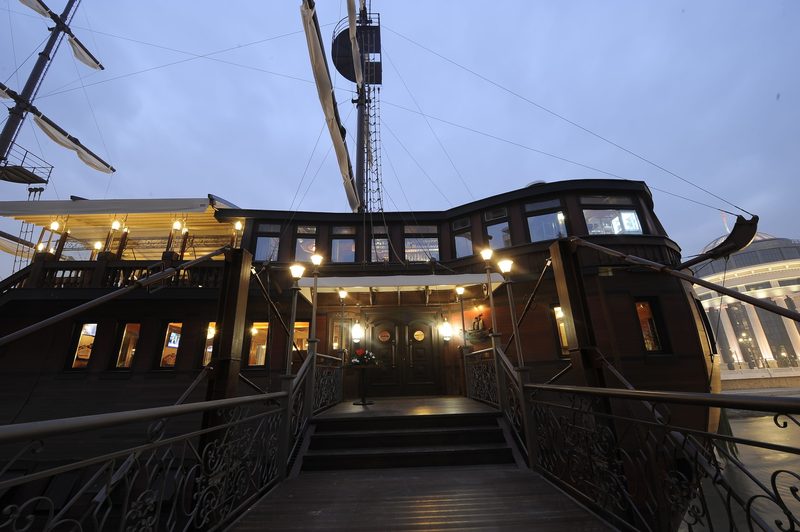
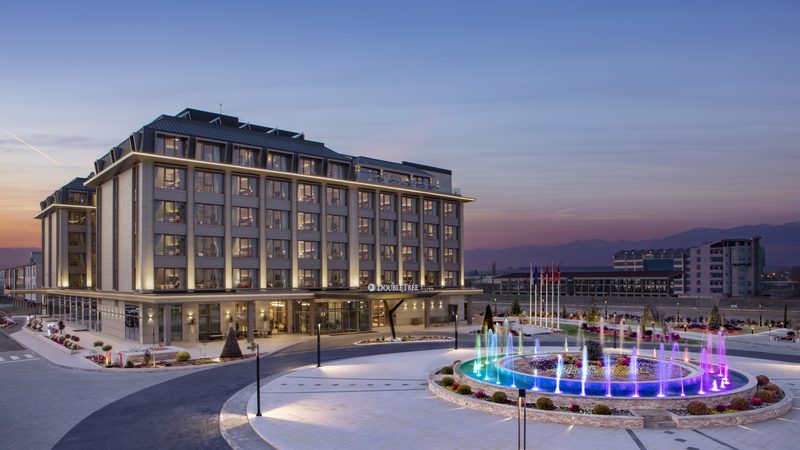
Hand-picked hotels across price tiers for April travellers.
Public Holidays in April
Dates that affect opening hours, transport and crowds
Велики Петок, Veliki Petok
Known in English as Good Friday. Observed nationwide as a public holiday.
Велики Петок, Veliki Petok
Known in English as Good Friday. Observed nationwide as a public holiday.
Прв ден Велигден, Prv den Veligden
Known in English as Easter Sunday. Observed nationwide as a public holiday.
Втор ден Велигден, Vtor den Veligden
Known in English as Easter Monday. Observed nationwide as a public holiday.
Packing Checklist
Bookmark this page — your progress is saved between visits
Need the full list with shopping links?
Climate-specific gear, brand recommendations, and what to leave at home.
View North Macedonia Packing List →Essential Tips
Insider knowledge and common pitfalls to avoid
Insider Knowledge
The best light for photographing the Church of St. John at Kaneo in Ohrid hits the cliff face in the first hour after sunrise, when the lake is glassy and no one else is there. By mid-morning the angle flattens and you get the same overexposed shot as every other visitor. The steep path down to the waterline below the church gives you the classic composition with the mountains behind. It is manageable but not marked, so go slowly.
Rakija, fruit brandy distilled from plums, grapes, or sometimes quince, is the social lubricant of North Macedonia, offered before meals, after meals, and at any gathering where two or more people sit down. Refusing outright comes across as mildly impolite. But nobody expects you to drain the glass in one go. The homemade versions you encounter in villages around Lake Prespa and in the Tikves wine country are consistently smoother and more complex than anything commercially bottled. Accept with a smile and sip slowly.
If you have a free day and binoculars, drive the 30 km (19 miles) from Ohrid south to Lake Prespa. The reed beds on the North Macedonian shore host a Dalmatian pelican colony that is one of the last significant breeding populations in Europe, and April is nesting season. The pelicans are enormous. Wingspans approach 3 m (10 ft). You can see them from the shore road without a boat. Almost no foreign visitors know about this. You will likely watch them in near-total solitude.
North Macedonia's bus network connects Skopje to Ohrid, Bitola, and most major towns. But the schedules can be erratic and the stations bewildering if you do not read Cyrillic script. Renting a car transforms the trip. Fuel is affordable by European standards. The roads between major cities are decent. The country is compact enough that nowhere sits more than three hours from Skopje. The drive from Ohrid to Bitola through Galicica National Park, roughly 100 km (62 miles), is one of the finest road journeys in the western Balkans. It winds through forest with snow-dusted peaks above and both lakes, Ohrid and Prespa, shining below on either side of the ridge.
Avoid These Mistakes
Spending the entire trip in Skopje. The capital is worth a day, maybe two. North Macedonia's real pull is elsewhere. Ohrid, the national parks, and small towns like Kratovo with its medieval towers and stone bridges or Bitola with its long Ottoman-era promenade where the evening passegiata still happens every night. Travelers who fly in and out of Skopje without leaving it miss nearly everything that makes this country worth the flight.
Packing for a single temperature. Skopje's April days swing from 8°C (46°F) at dawn to 17°C (62°F) by afternoon. This range takes you from needing a fleece to wanting short sleeves within a few hours. Travelers who pack only summer clothes shiver through every morning. Those who bring only warm layers overheat by lunch. Layers are the only honest answer.
Assuming you can swim in Lake Ohrid in April. The postcard images make it look almost tropical. The water clarity is extraordinary. You can see the rocky bottom from the boardwalk. But the lake sits at 695 m (2,280 ft) elevation and the water in April remains well below comfortable swimming temperatures. If lake swimming is central to your trip, come in July or August instead. Accept the crowds that come with it.
Ready to plan your trip to North Macedonia?
Now that you've got the research covered, here's where to go next.
Explore More Activities in North Macedonia
Didn't see anything interesting yet?
Browse Viator's full catalog of tours, day trips, food experiences, and private guides in North Macedonia.
See All North Macedonia Tours on Viator